Online checkout isn't live yet. Complete payments setup to accept real payments.

Authorized Benjamin Moore dealer & Ace Hardware — Delray Beach, FL

Pickup at Delray Beach — tinted same day
Hessler Paint & Ace Hardware

Paint & Color · Floor coatings/What to know about floor coatings

What to know about floor coatings

Compare coating types, prep your concrete and figure out how much you need.

  • Many services same day/walk-in
  • Local experts in Delray Beach
← All floor coating topics

Floor coatings are one of the trickiest paint jobs

Peeling, bubbling, hot-tire lifting and slippery floors are common — and almost always avoidable. Most failures come down to the wrong product, poor prep, or rushing the application and cure. This overview walks you through what to know before you start.

4 keys to a floor that lasts

1

Hire someone who knows floors

An experienced pro has the grinders, testers and know-how — and has seen what goes wrong.

2

Choose the right product

Match the coating to the surface, the traffic, sun exposure and what's already down.

3

Prep it properly

Clean, test, remove what won't hold, repair cracks and profile the concrete so the coating can grip.

4

Apply it right — and let it cure

Right temperature, right thickness, right recoat window, and full cure time before cars or furniture.

What to consider before you start

What's on the floor now?

  • Bare concrete, pavers, old paint, sealer, epoxy, stain or tile adhesive all behave differently.
  • Water-based products often won't stick over solvent-based or epoxy coatings — and some coatings lift the ones under them.
  • Bring a photo or a chip to the counter and we'll help identify it.

How to test what's down

  • Water drop: if it beads, there's a sealer or coating; if it soaks in and darkens, it's bare.
  • Scratch or tape test: scratch an X, press tape on and pull — if coating comes up, it's not holding.
  • Solvent rub: a rag with xylene or lacquer thinner softening it points to an acrylic or solvent coating.
  • Moisture: tape a plastic square down for 24 hours. Darkening or droplets underneath means moisture problems.

Remove it or coat over it?

  • Coat over only if the old coating is well bonded, clean, compatible and sanded dull.
  • Remove it if it's peeling, flaking, bubbling, chalky, or a different chemistry than the new product.
  • When in doubt, test a small patch first and let it cure before doing the whole floor.

Equipment to remove coatings

  • Floor grinder with diamond tooling — the standard for removing epoxy and profiling concrete.
  • Shot blaster — fast removal and profile on large commercial floors.
  • Chemical strippers and a scraper for small areas or thin acrylics.
  • Pressure washer for cleaning, not removal — and a HEPA vacuum for grinding dust.

Create a profile

  • Coatings need a slightly rough surface — like medium sandpaper — to grab onto. Smooth, slick concrete makes coatings peel.
  • Grinding (best) or acid etching (for lighter-duty coatings) opens the surface.
  • Rinse and let the slab dry completely before coating.

What makes it strong

  • Bond: a clean, profiled, dry surface and the right primer.
  • Thickness: the right film build — two-part epoxies build much thicker than paints.
  • Chemistry: two-part epoxies and xylene coatings resist hot tires and chemicals better than water-based paints.
  • Topcoat: a clear UV-stable topcoat protects epoxy from sun and wear.

Application & cure

  • Check the temperature, humidity and the slab's dew point — Florida heat shortens working time.
  • Two-part epoxy has a pot life: mix only what you can roll in time.
  • Walk-on, drive-on and full-cure times are different. Driving on it too soon causes hot-tire lifting.

Common problems we see

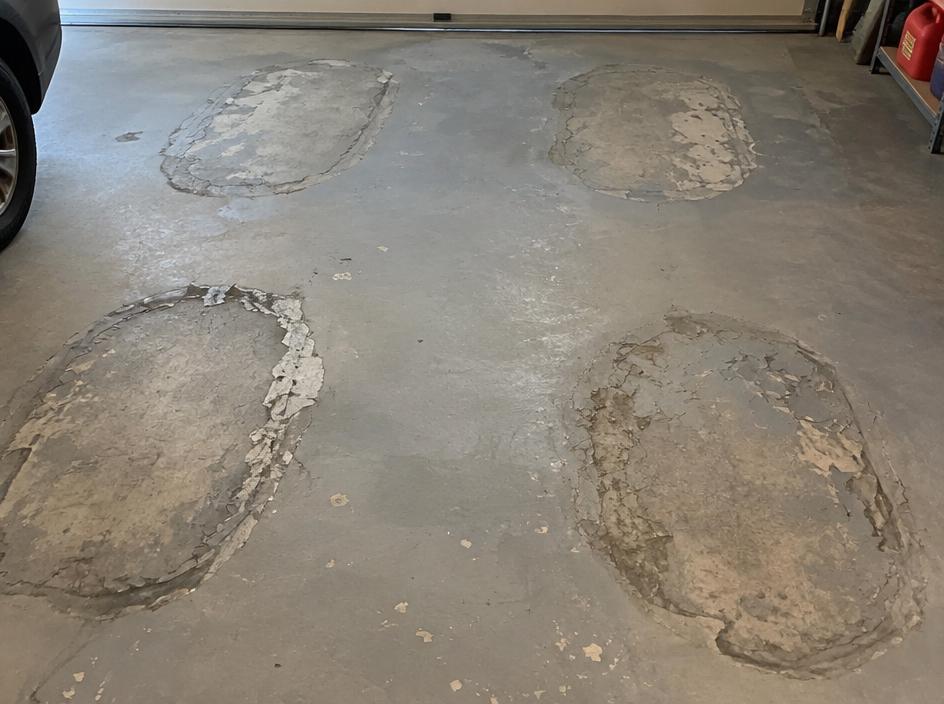
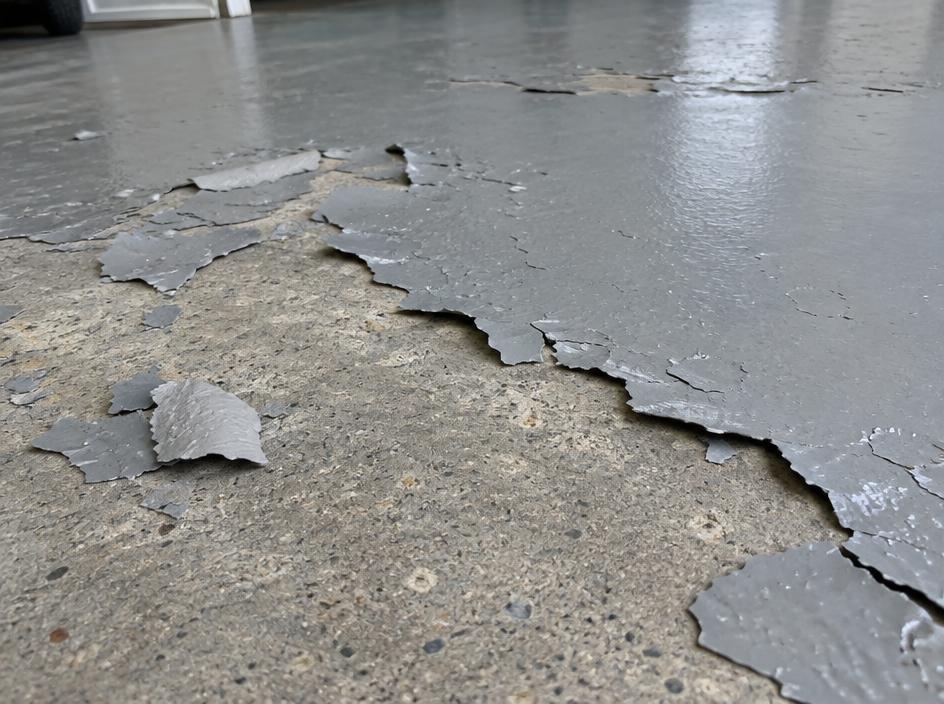
  • Peeling and flaking — poor prep or the wrong product over an old coating.
  • Hot-tire pickup — wrong product for a garage, or cars on it before full cure.
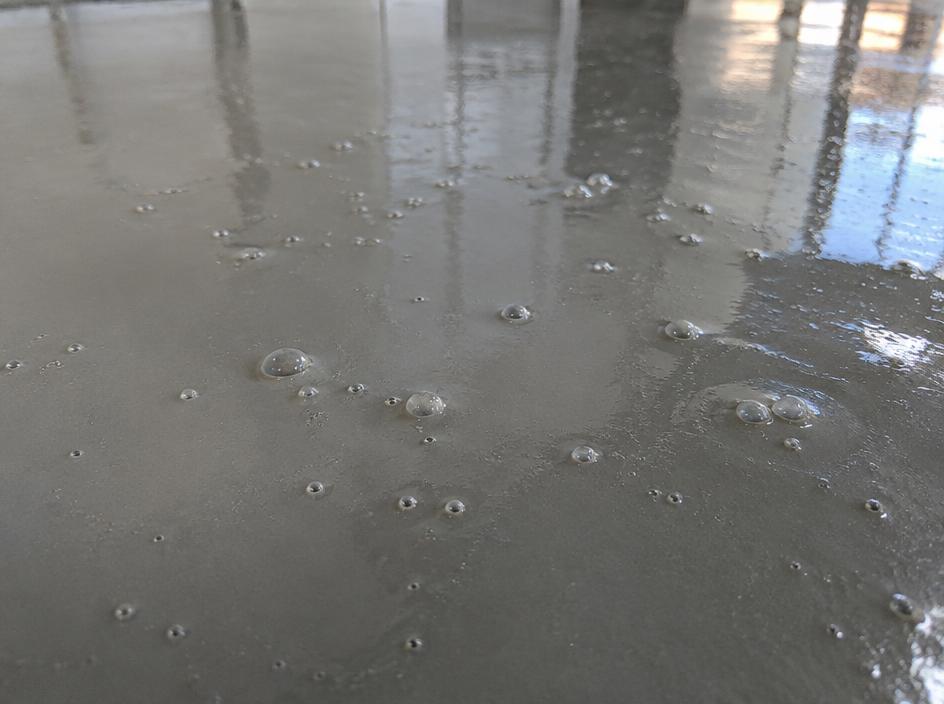
  • Bubbles and blisters — moisture in the slab or applying in direct sun.
  • Slippery when wet — no non-skid in the final coat.

Most common floor job problems

What goes wrong — and how to prevent it

Nearly every failure traces back to the product choice, the prep, or the application and cure. Here's what to look for.

Peeling & flaking

Peeling & flaking

Probable causes

  • Smooth, unprofiled concrete — nothing to grip
  • Oil, sealer or old coating left on the surface
  • Moisture pushing up through the slab

Best solutions

  • Grind or etch to a proper profile
  • Degrease and remove failing coatings
  • Do a moisture test before coating
Bubbling & blistering

Bubbling & blistering

Probable causes

  • Outgassing from porous concrete in rising heat
  • Applying too thick or over-mixing
  • Trapped moisture under the coating

Best solutions

  • Apply in falling temperatures (late afternoon)
  • Prime porous slabs; follow film thickness
  • Back-roll and use a spiked roller on epoxy
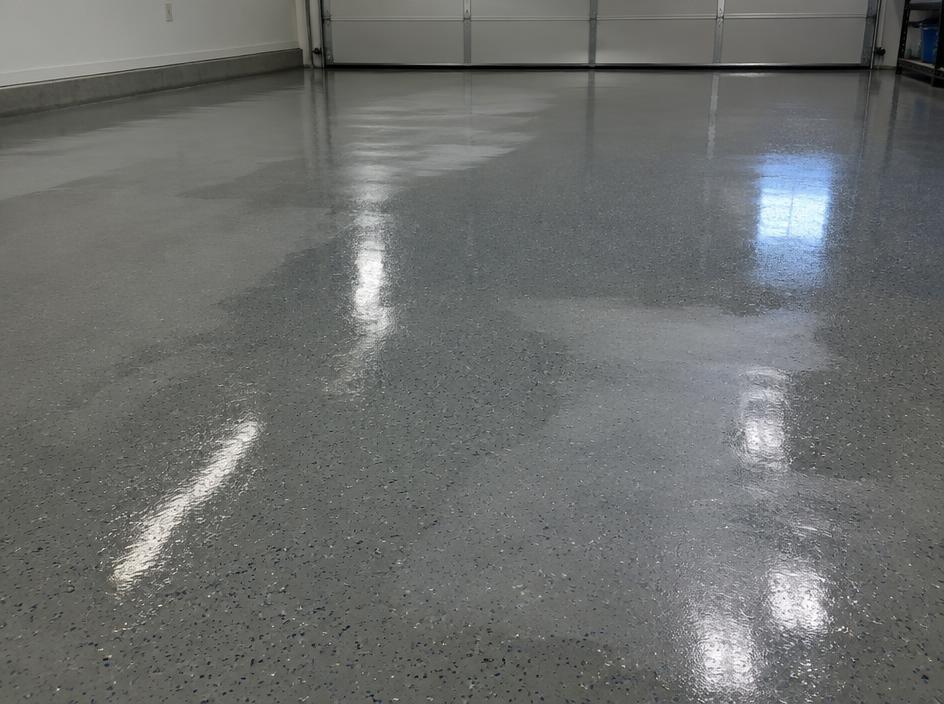
Flashing (uneven sheen)

Flashing (uneven sheen)

Probable causes

  • Uneven porosity or patched areas absorbing differently
  • Lap marks from rolling into drying edges
  • Uneven film thickness

Best solutions

  • Prime or seal the slab first for even absorption
  • Keep a wet edge and work in small sections
  • Apply a uniform second coat
Hot-tire pickup

Hot-tire pickup

Probable causes

  • Single-part or latex paint used where cars park
  • Driving on it before full cure
  • Poor adhesion from weak prep

Best solutions

  • Use a two-part epoxy or polyaspartic system
  • Wait the full cure time before parking
  • Profile the concrete properly
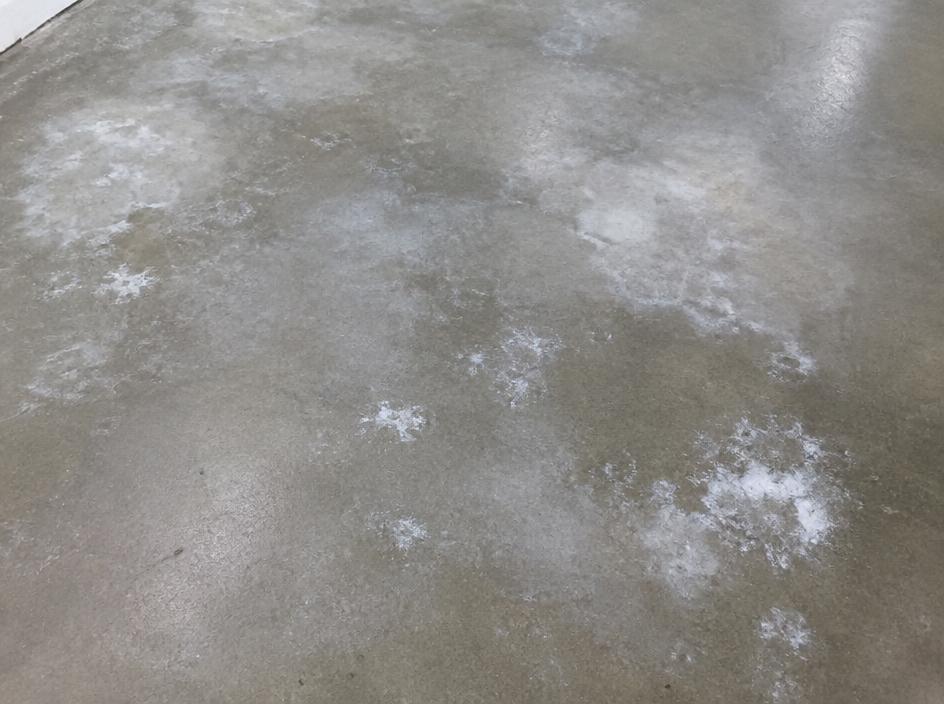
White haze, blush & efflorescence

White haze, blush & efflorescence

Probable causes

  • Humidity or dew during cure (amine blush)
  • Mineral salts carried up by slab moisture
  • Coating over damp concrete

Best solutions

  • Coat only within the label's temperature/humidity window
  • Clean salts and fix the moisture source
  • Wash blush off before recoating
Soft, tacky or won't cure

Soft, tacky or won't cure

Probable causes

  • Wrong mix ratio or not mixed thoroughly
  • Too cold to cure
  • Coat too heavy

Best solutions

  • Measure parts exactly and mix the full time
  • Stay within the label's minimum temperature
  • Remove uncured material and reapply
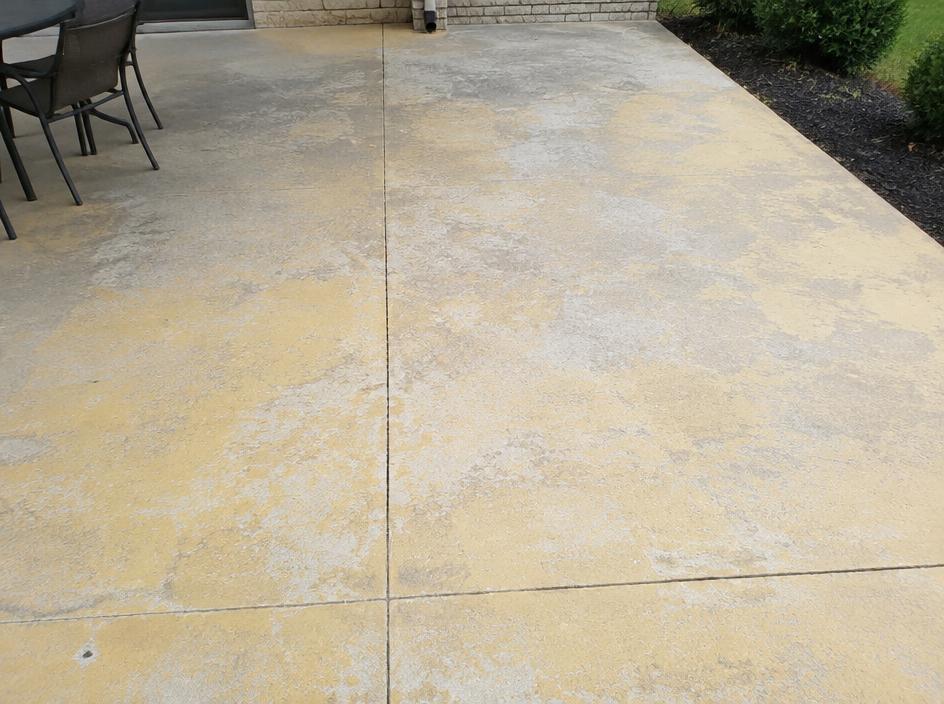
Yellowing & fading

Yellowing & fading

Probable causes

  • Indoor-only epoxy used in Florida sun
  • No UV-stable topcoat
  • Harsh chemicals or pool water

Best solutions

  • Pick an exterior-rated, UV-stable product
  • Add a UV-resistant topcoat over epoxy
  • Rinse chemicals promptly
Slippery when wet

Slippery when wet

Probable causes

  • Glossy finish on pool decks, ramps or patios
  • No non-skid additive
  • Additive not mixed or spread evenly

Best solutions

  • Add non-skid (RH-01 per gallon, RH-05 per 5 gal)
  • Choose a satin or textured finish outdoors
  • Stir often so grit stays even

Compare

Coating types at a glance

TypeBest forHot tiresOdorLook
Water-based concrete coating & stainPatios, porches, walkways, lanaisNoLowSolid color, many colors
Xylene concrete coating & stainDriveways, carports, apronsBestStrong — ventilate, respiratorSolid color or translucent stain
One-part epoxyGarages and utility rooms, easier DIYGoodModerateSolid color, optional flake
Two-part epoxyGarages, workshops, commercial floorsBestModerateThick, glossy, optional flake
SealerPavers and bare concrete you want to keepGoodVariesClear, wet-look or natural

Brands we carry: Tuff Top, Benjamin Moore, INSL-X and Gulf Coast Paint.

Before you buy: prep check

  • Moisture test: tape a plastic square down for 24 hours. Darkened concrete underneath means moisture — ask us before coating.
  • Old coating? Scratch it with a key. If it flakes, it has to come off first.
  • Sprinkle water: if it beads, the slab is sealed and needs etching or grinding.
  • New concrete must cure about 28 days.

Non-skid

We recommend non-skid additive in every floor coating, without exception.

Read the full floor coatings guide

How much do I need?

Enter your area

Estimate at ~250 sq ft per gallon per coat. Rough or porous concrete uses more.