A division of Hessler Paint & Ace Hardware
Back to the main siteMain site
The complete guide
Window treatments, explained the way people actually shop for them
Eleven families, filtered nine different ways. Start from the look you want, the light problem you have, the material you trust, or the brand you already know — you will land in the same place, with the trade-offs stated up front.
Start anywhere
Five ways to shop this category
Nobody arrives at window treatments the same way. Pick the door that matches what you already know.
Browse & compare
Filter all eleven families
Combine as many filters as you like. Within a group we treat your picks as “any of these”; across groups every filter has to be satisfied. Each group explains what the choice actually decides.
Design aesthetic
Most people start here — they know the room they want before they know the product. Pick the feeling and we will show you the families that get there.
Light & privacy
The single most misunderstood decision. "Room darkening" is not blackout, and a shade you can see out of in daylight reverses at night once the lamps are on.
How it operates
How the treatment moves matters more day to day than how it looks. Anything you cannot reach should be motorized, and anywhere kids or pets go should be cordless.
Material
Material drives durability, price, and how the treatment handles South Florida humidity and salt air.
Texture
Two treatments in the same color can read completely differently. Texture is what your eye actually registers from across the room.
Color direction
Pick the treatment before the paint. Shade and fabric palettes are finite; paint is not. Choosing paint first is the most common and most expensive mistake we see.
The opening
The window itself rules some options out no matter how much you like them. Sliders, French doors, and wet rooms all have hard requirements.
Room
Same house, different jobs. A bedroom is a light problem, a kitchen is a cleaning problem, a great room is a scale problem.
Budget direction
Relative, not absolute — every treatment is quoted measured and installed. Where you spend usually comes down to fabrication versus hardware.
11 of 11 families match.
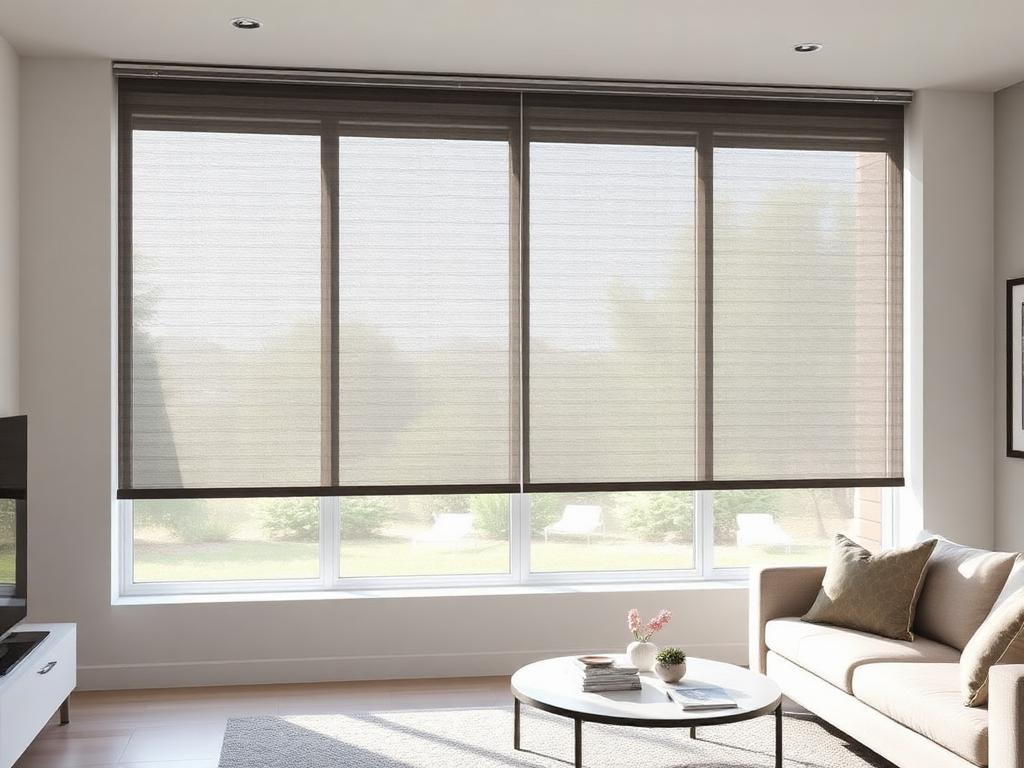
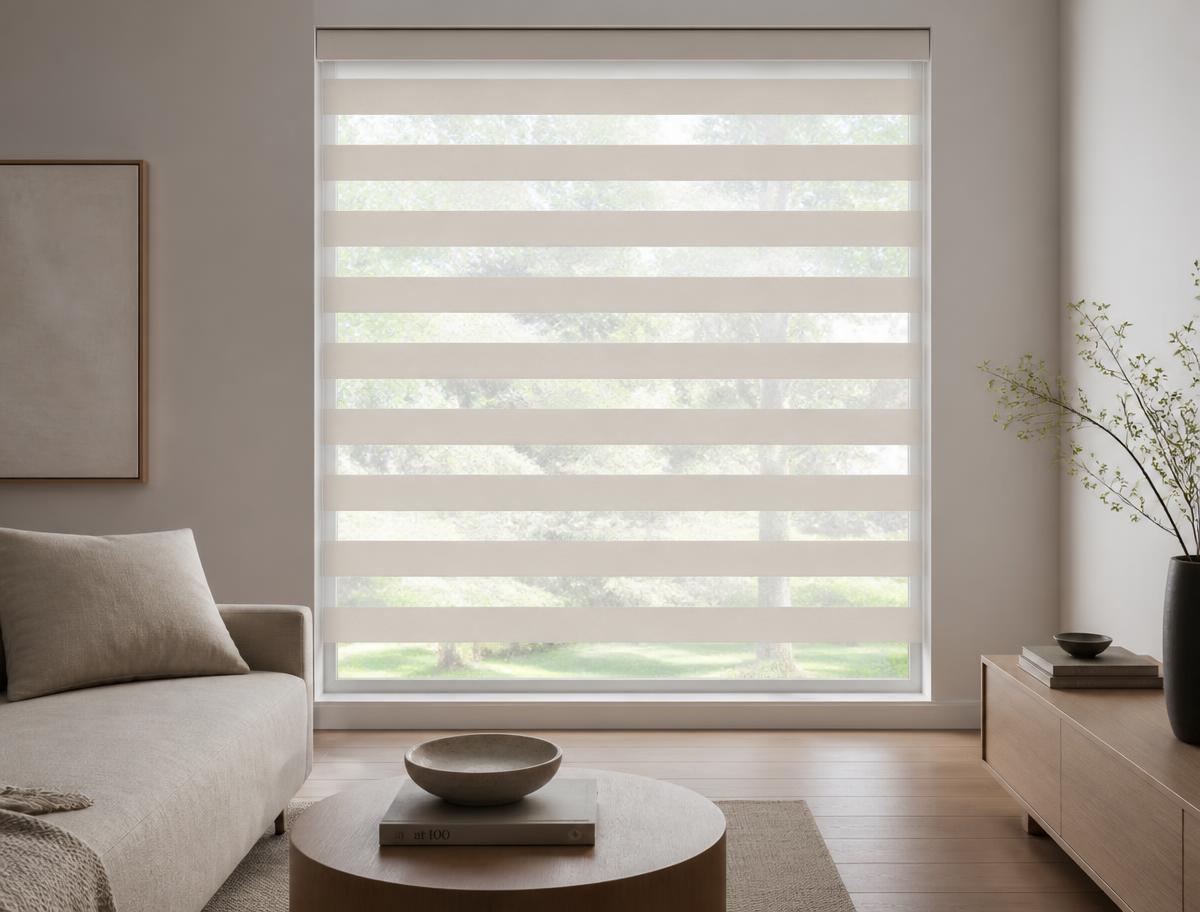
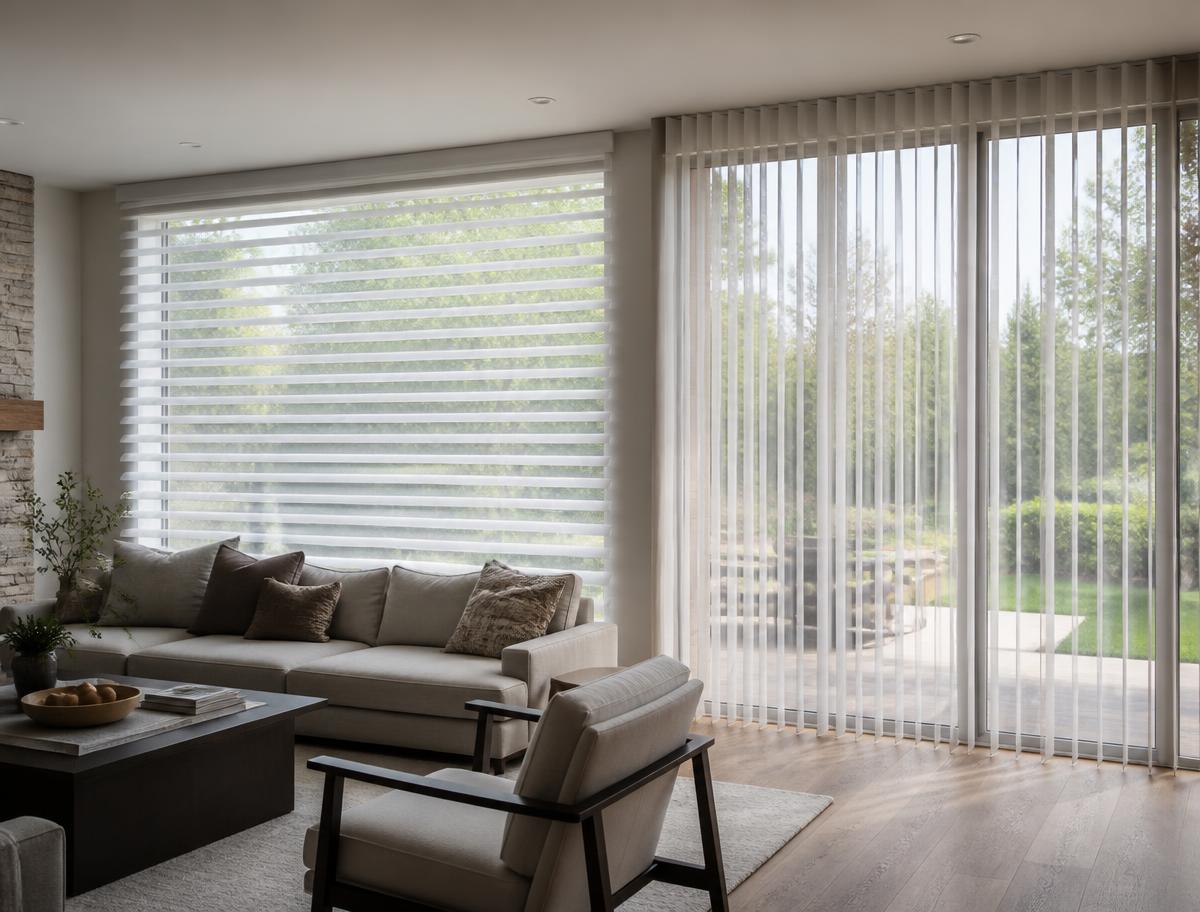
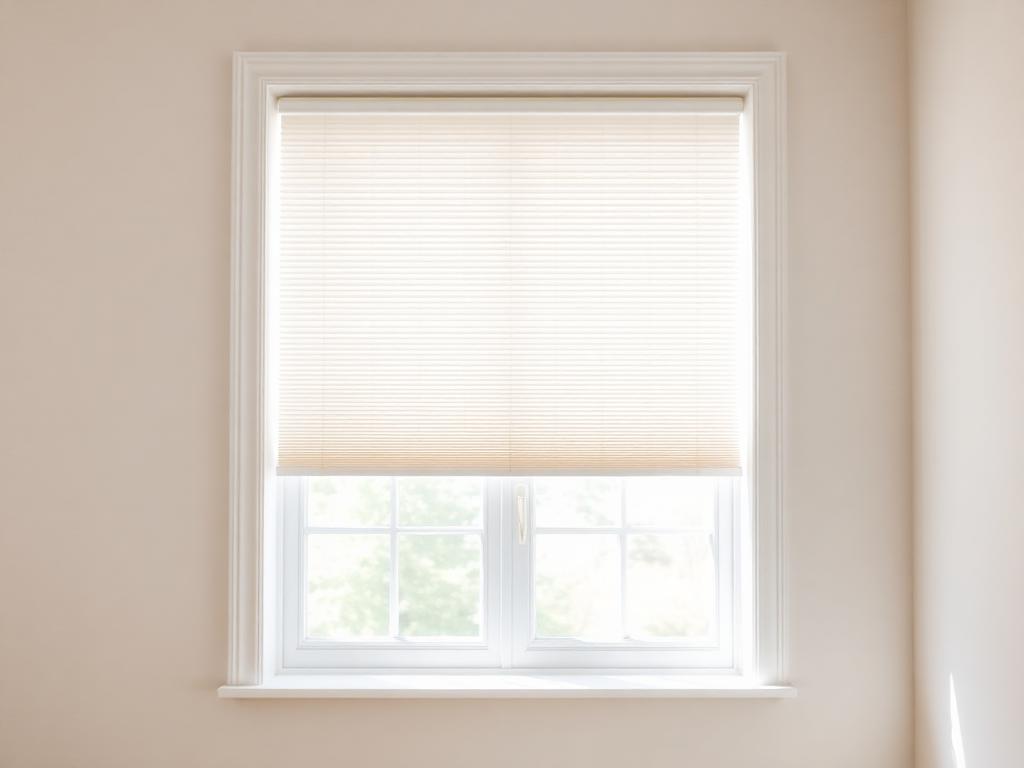
Plain language
Twelve terms and you can shop like a designer
These are the words on every quote, and the ones that decide whether you are happy a year from now.
Openness factor
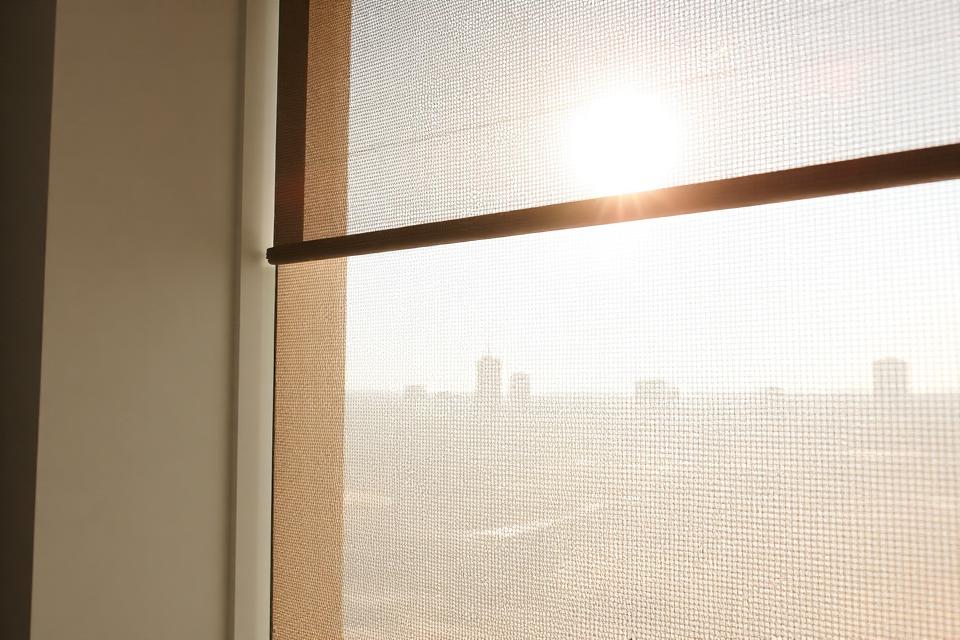
How much of a screen fabric is hole rather than yarn, given as a percentage. 1–3% blocks the most glare and keeps the least view; 5–10% keeps more view and lets more heat through. It is a property of the material, so no product name can get you there on its own.
Light gap
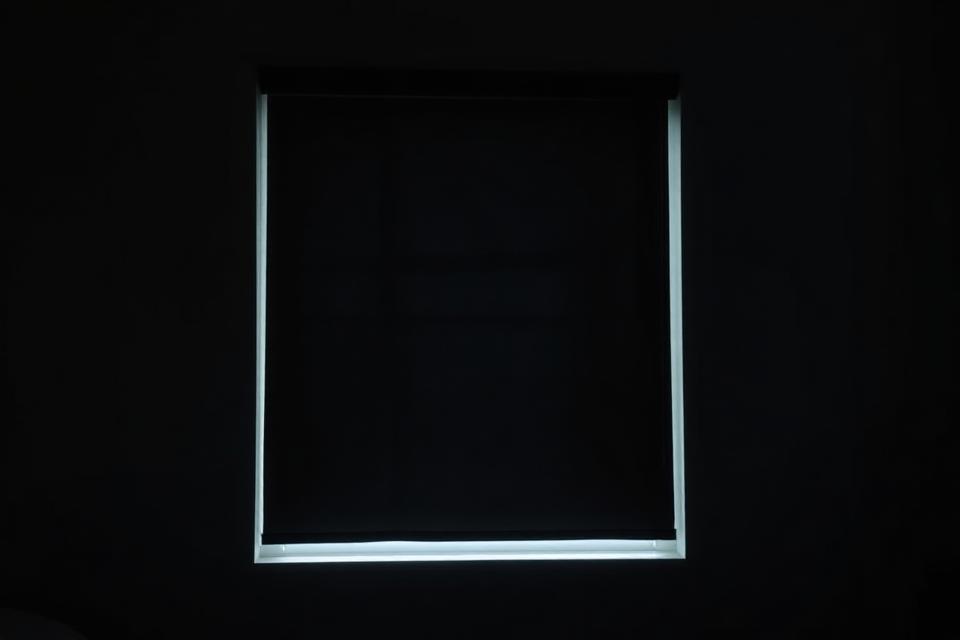
The halo of light around a shade mounted inside the window opening. Every inside mount has one. Blackout means fabric plus a perimeter — side channels, an outside mount with generous overlap, or drapery over the top.
Room darkening vs. blackout
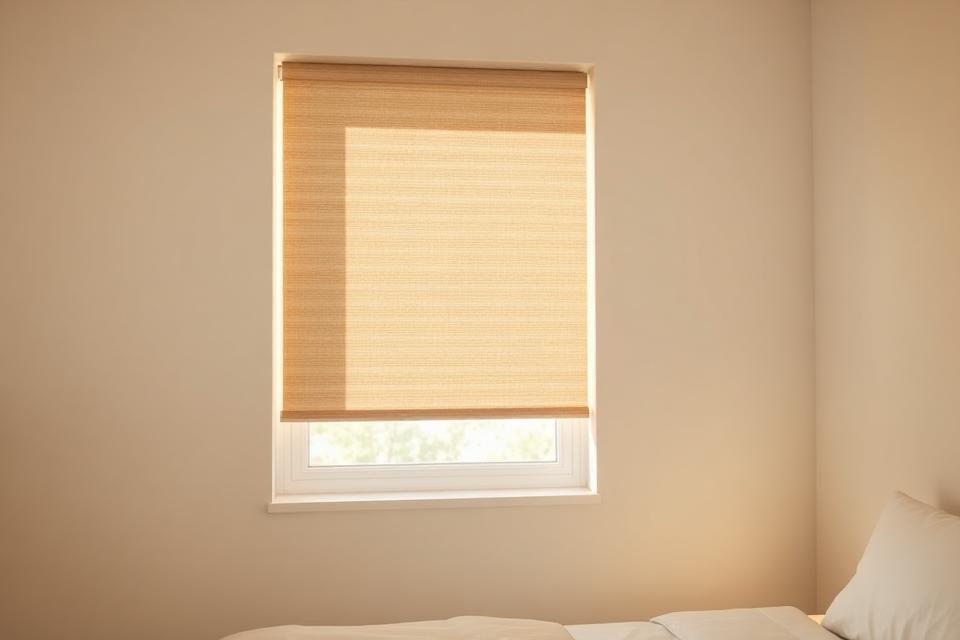
Room darkening blocks most light through the fabric. Blackout blocks essentially all of it and only works as a system. If someone in the house sleeps during the day, ask for the system, not the fabric.
Inside vs. outside mount
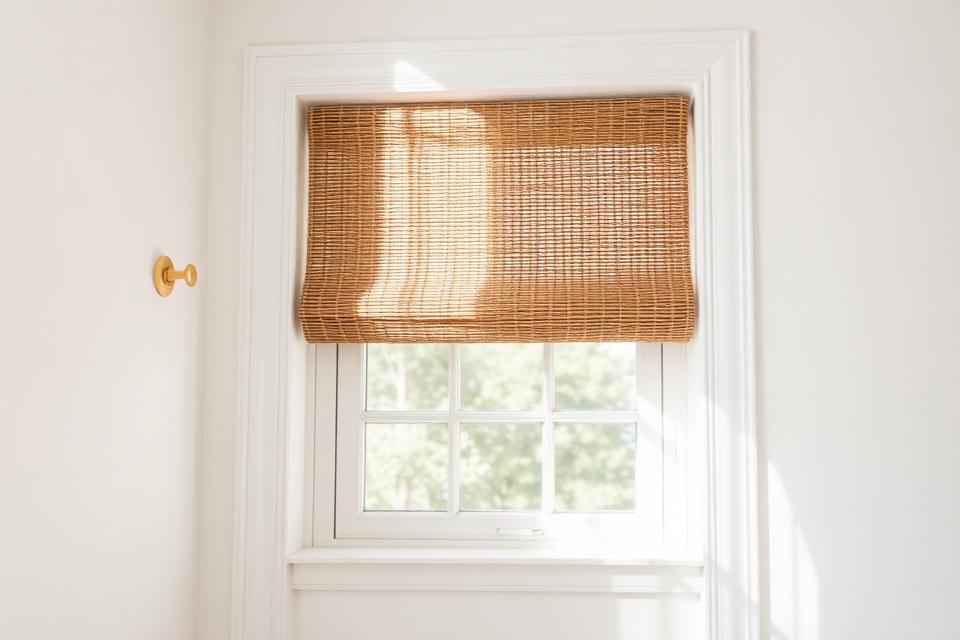
Inside sits in the window opening for a clean, built-in look and needs enough depth. Outside mounts on the wall or trim, covers more, darkens better, and hides an out-of-square opening.
Stack
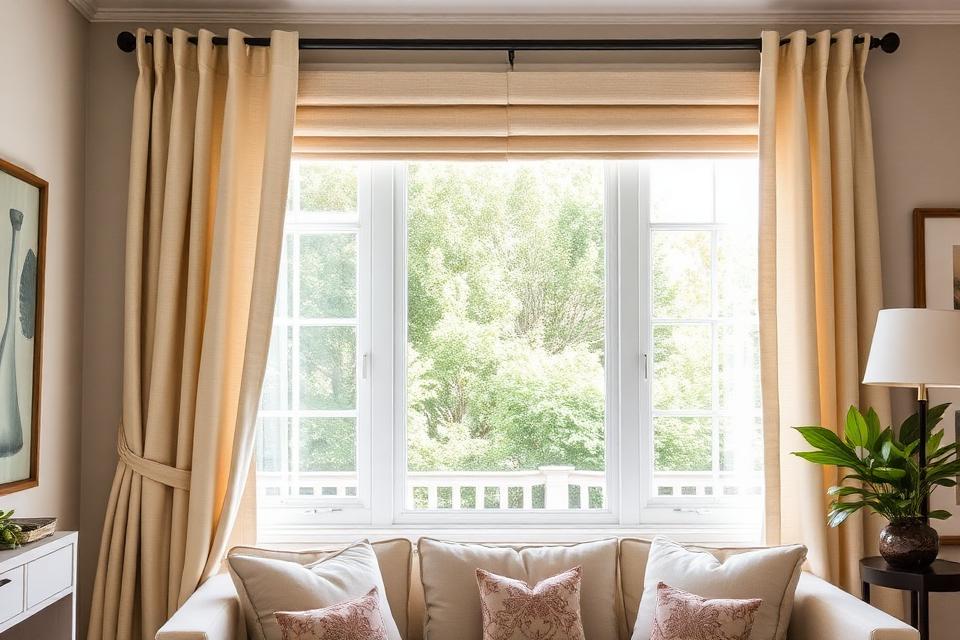
How much of the window the treatment covers when fully open — at the top for shades, to the side for panels and drapery. Small stack keeps more glass. Ask for the stack dimension before you order.
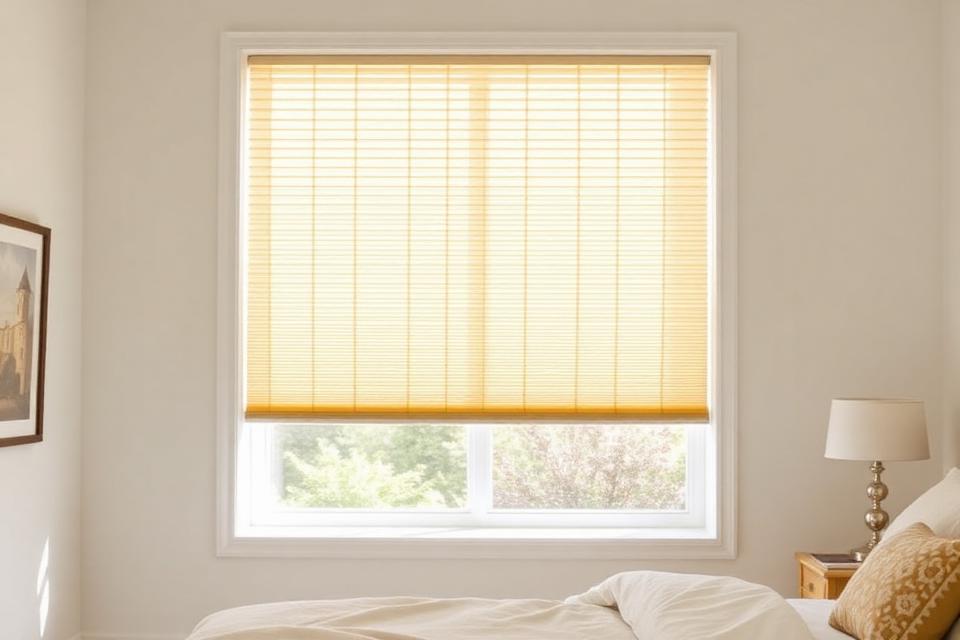
Top-down / bottom-up (TDBU)
A shade that lowers from the top as well as rising from the bottom. Daylight up high, privacy at eye level. Most common on cellular and pleated shades.
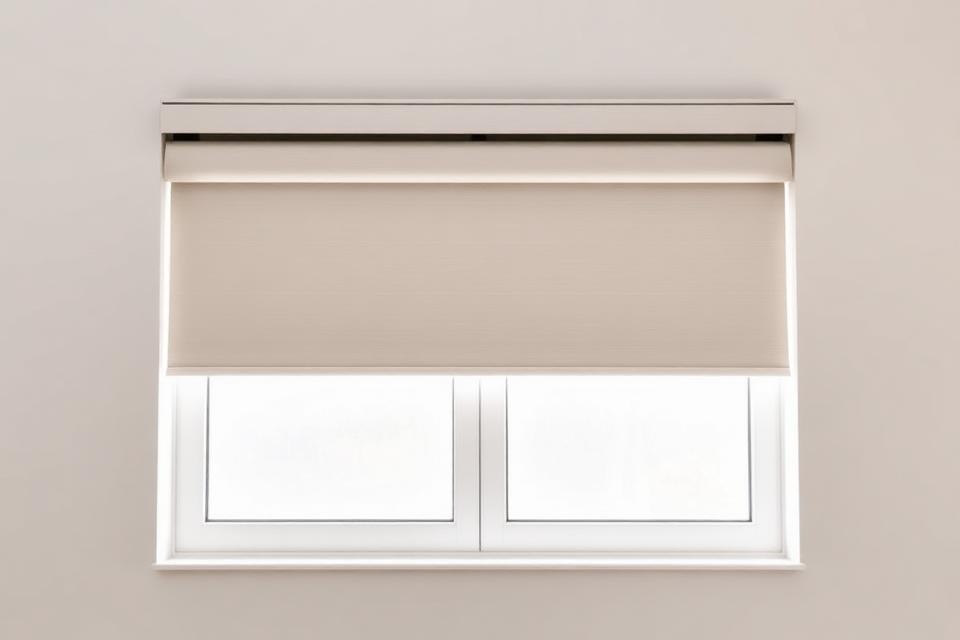
Cassette, fascia, and pocket
Three ways to hide a roller's tube. A cassette wraps it, a fascia is a flat cover across the front, and a recessed ceiling pocket makes the shade disappear entirely — decided during construction, not after.
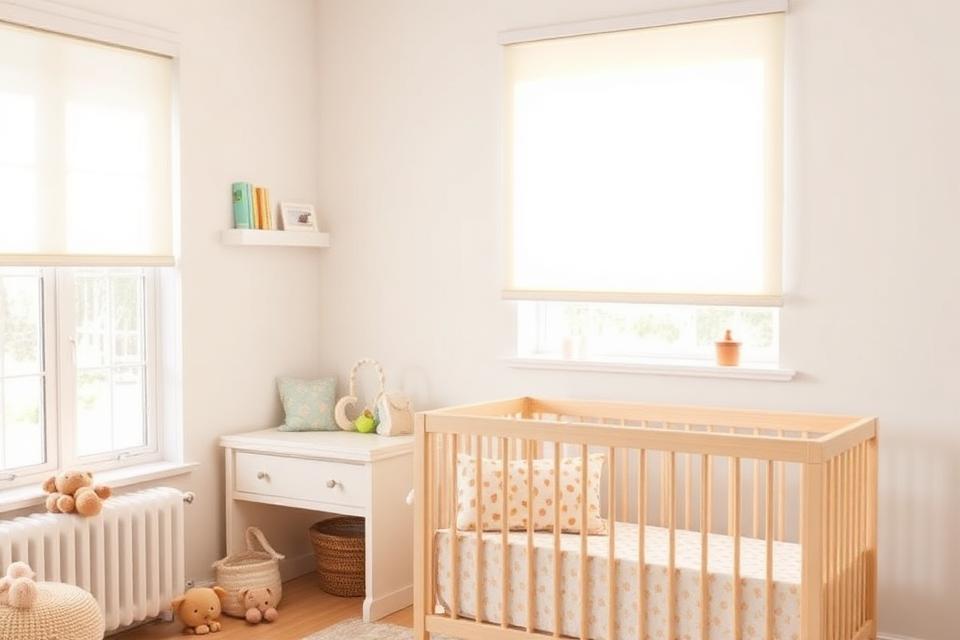
Cordless & child safety
No accessible pull cords. It is the industry default now and the only correct answer in a kids' room, nursery, or playroom.
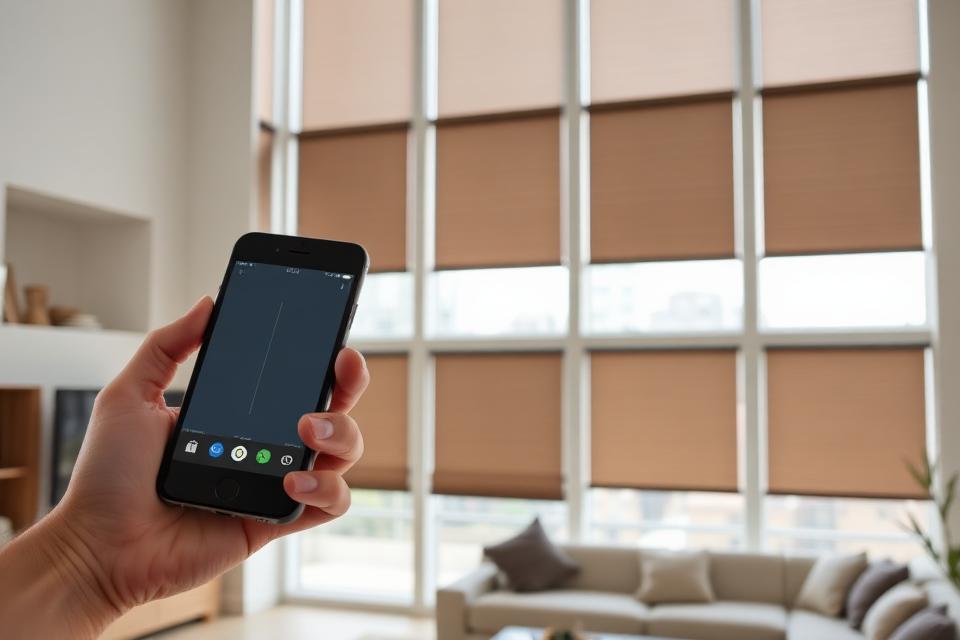
Motorization
Battery, hardwired, or solar-charged motors with app, remote, scene, and voice control. Worth it on anything tall, hard to reach, or repeated across many windows so they all move together.
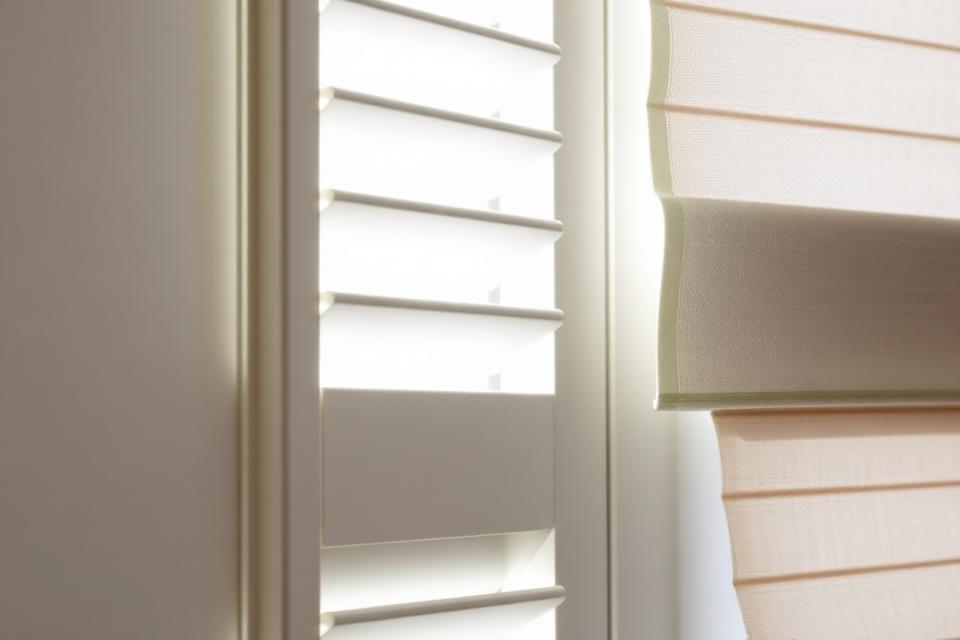
Vanes and louvers
The tilting elements — fabric vanes in a sheer shading, wood or composite louvers in a shutter, slats in a blind. Tilting changes light and privacy without moving the treatment itself.
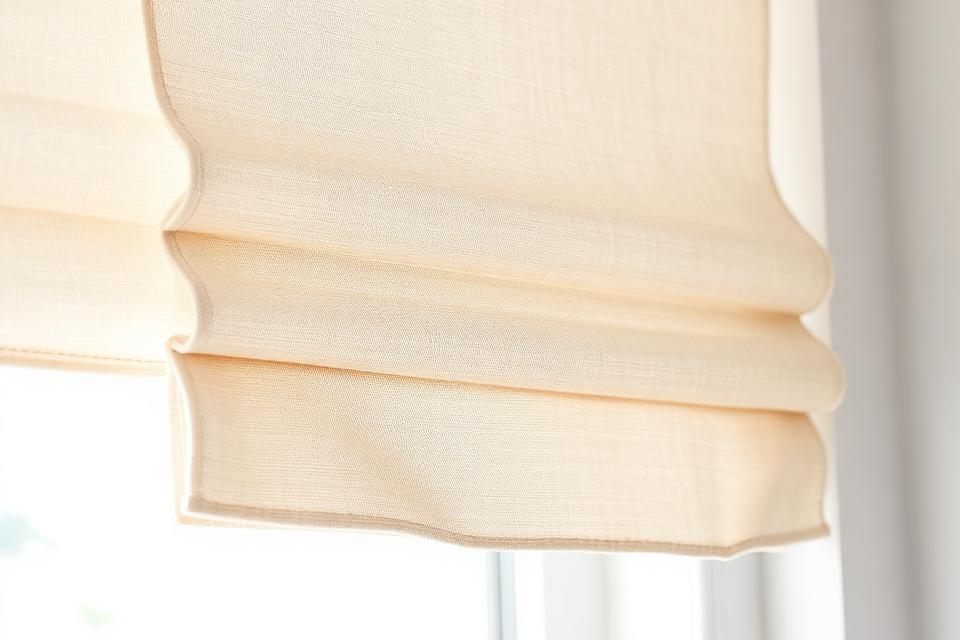
Liner
A second layer behind the face fabric on Romans, drapery, and woven woods. It sets privacy and darkness, protects the face fabric from sun, and makes the outside view of your house uniform.
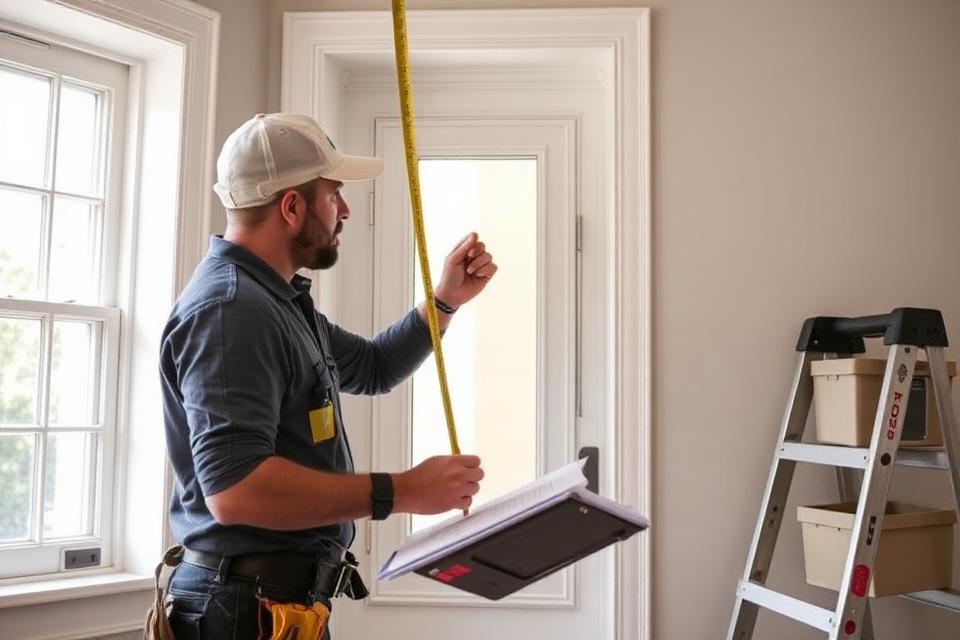
Measured and installed
How we quote everything. We measure the opening, confirm depth, mount, and stack side, and install it. A window covering ordered to a number you measured yourself is not returnable if it is wrong.
Brands
Who makes what, and what each line is known for
Browse a manufacturer's collections, then bring the style number to the showroom and we will quote it measured and installed.
How it works
From browsing to installed
Everything is quoted measured and installed, so the only decision left for you is which one you love.
1. Narrow it here
Filter or run the finder until you are down to two or three families. Nobody should walk into a showroom cold.
2. See the samples
We pull the books and hold fabrics against your photos. Take samples home — daylight at your window is the only real test.
3. We measure
We measure every opening, confirm depth, mount type, stack side, and clearances, and note anything that changes the price.
4. Quote & order
One quote, measured and installed, with lead time stated. Custom window coverings are made to your opening and are not returnable.
5. Install
Our installers hang it, level it, program motors and scenes, and haul away the packaging.
Questions
What people ask before they buy
What is the difference between room darkening and blackout?
Room darkening fabric blocks most light. True blackout is a system: blackout fabric plus a sealed perimeter — side channels, an outside mount with several inches of overlap, or drapery layered over a shade. An inside-mounted shade always leaks light at the jamb and the sill, no matter what the fabric is rated.
Can I see out of a shade while it is down?
Yes, with an open-weave solar screen, a banded shade with the bands aligned, or a sheer shading with the vanes open. All of them reverse after dark: once your interior lights are on, people outside can see in and you cannot see out. Plan a second layer in bedrooms and baths.
What works on a sliding glass door?
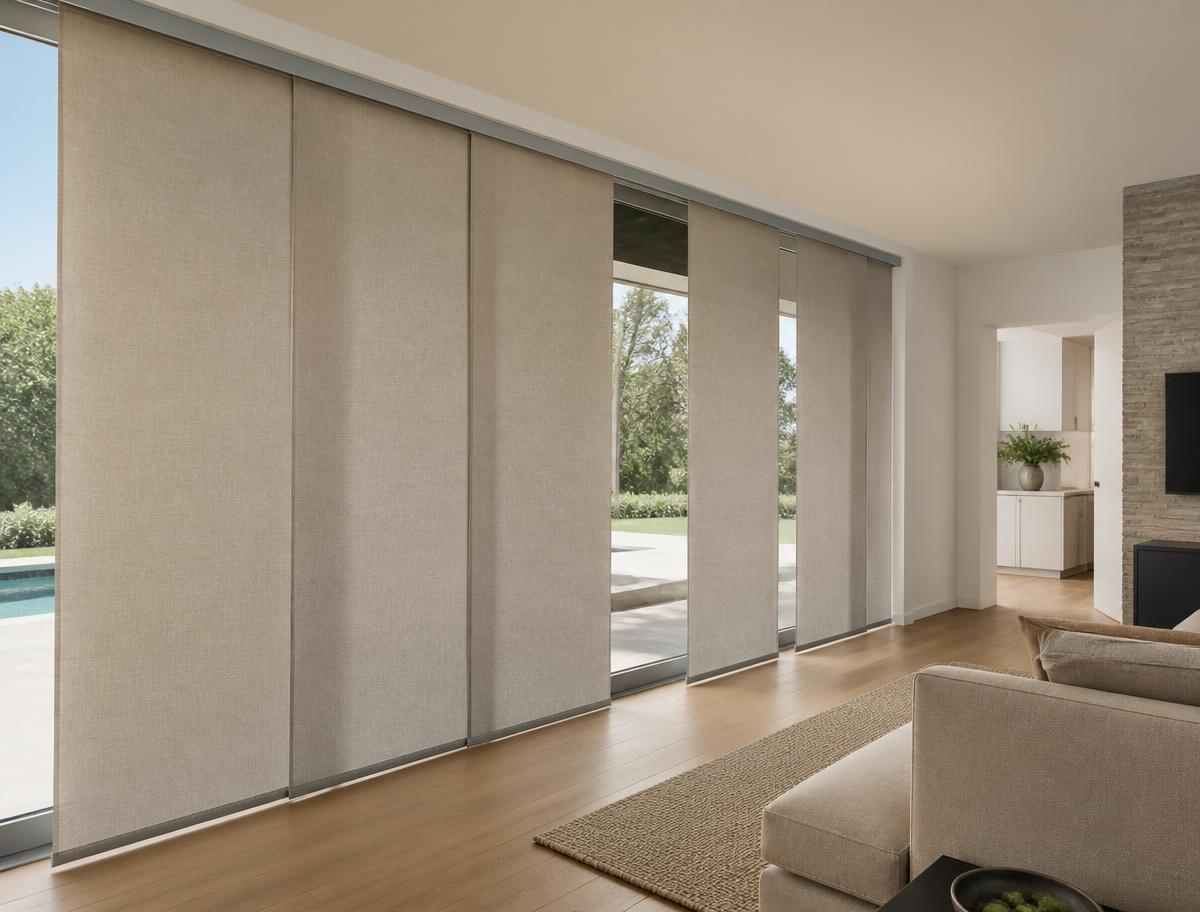
Sliding panels, vertical blinds, sheer verticals, a wide roller on a single tube, or draw drapery. The decision is which side the stack lands on and how much wall it can stack onto, so the door stays fully usable.
Which window treatments hold up to Florida humidity and salt air?
Composite and faux wood shutters and blinds, aluminum, vinyl, and performance screen fabrics. Keep real wood in dry, conditioned rooms and away from baths, kitchens, and open-air lanais.
Should I pick paint or window treatments first?
Window treatments first, every time. Shade and fabric palettes are finite, and paint can be mixed to match anything. Choosing the paint first is the most common and most expensive order to do this in.
Do you measure and install?
Yes — everything we sell is quoted measured and installed by our team in Delray Beach, Boca Raton, Boynton Beach, and the Palm Beaches. Custom window coverings are made to your opening, so they are not returnable if a self-measure is wrong.
Is motorization worth it?
On anything tall, hard to reach, or repeated across many windows, yes — those shades never get operated otherwise. Battery motors retrofit without wiring; hardwired and solar options make sense in new construction and on large runs.